AgriTech Platform
Krishidnya
Empowering farmers with technology, data and innovation.
01 — The Problem
What we were solving
Indian agriculture is still largely intuition-driven and disconnected from modern tools. Farmers face challenges with labour costs, yield unpredictability, market access, and soil health — without reliable data or technology to make better decisions. Traditional farming wisdom exists, but there was no platform combining it with precision technology at scale.
02 — The Approach
How we approached it
We built Krishidnya as a comprehensive agritech platform that combines software, IoT, robotics and AI to work across the full agricultural workflow — from field monitoring to market access. The product had to work for farmers with varying levels of digital literacy, in areas with inconsistent connectivity, while still delivering measurable impact.
03 — What We Built
What we built
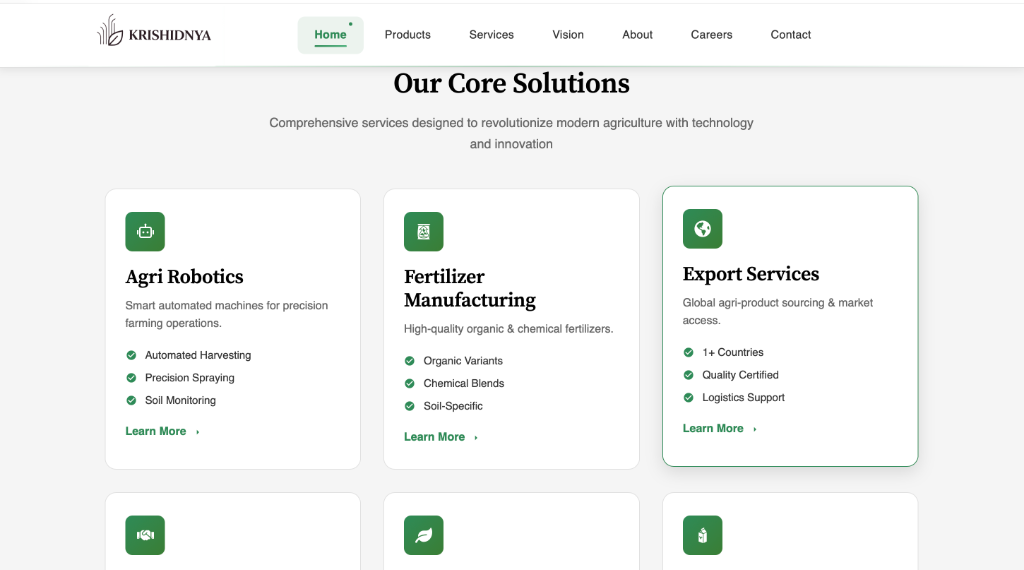
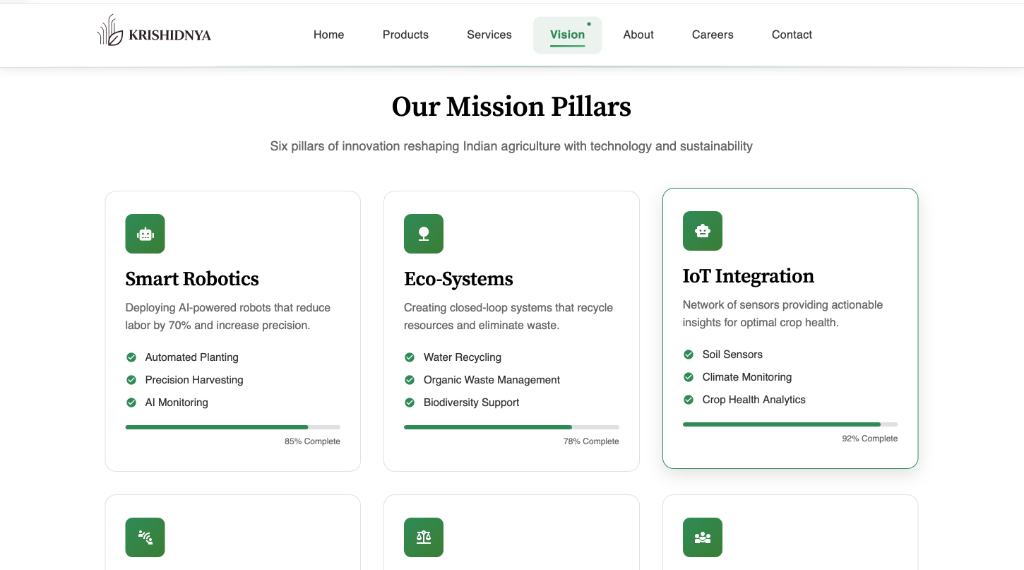
A multi-product agritech platform covering: Agri Robotics (automated harvesting, precision spraying, soil monitoring), Fertilizer Manufacturing tools (organic and chemical blends, soil-specific formulation), Export Services (global agri-product sourcing and logistics), IoT Integration (soil sensors, climate monitoring, crop health analytics), Smart Robotics (AI-powered labour reduction systems), and Eco-Systems (water recycling, organic waste management). The platform provides data-driven insights, market access, and smart farming tools — all in one digital ecosystem.
04 — Outcome
What we achieved
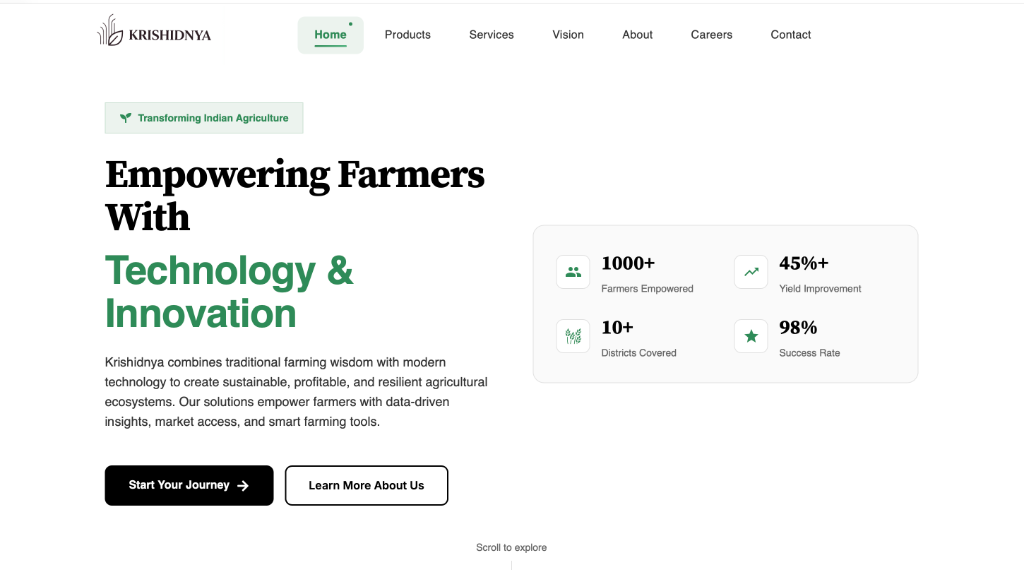
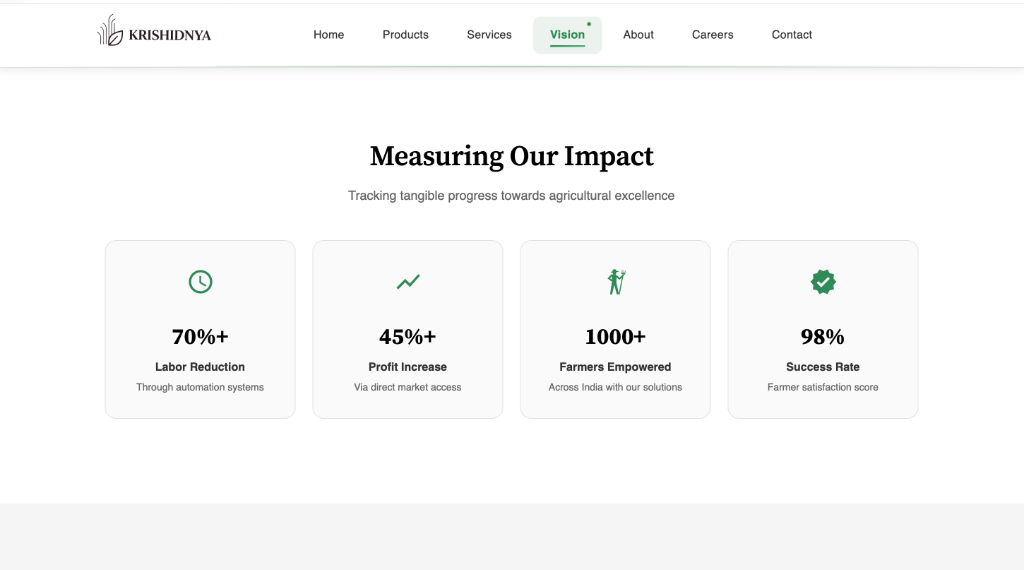
A working platform delivering 1000+ farmers empowered across 10+ districts, 45%+ yield improvement, 70%+ labour reduction through automation, 45%+ profit increase via direct market access, and a 98% farmer satisfaction rate. The platform covers the full spectrum from IoT field data to robotics to export logistics.
05 — Technology
Stack used
06 — Reflection
What we learned
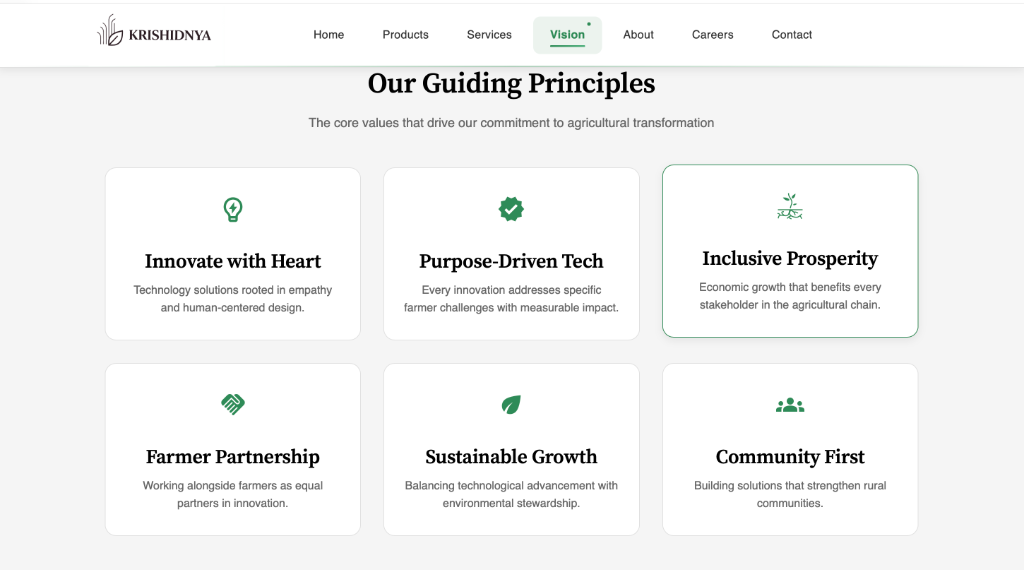
Building for Indian agriculture required combining domains that rarely talk to each other — embedded IoT systems, agricultural science, mobile software, and logistics. The hardest part was making complex technology feel simple and trustworthy to farmers on the ground. Designing with them rather than for them made all the difference.
Interested in building something similar?
Tell us what you're working on.